
Engineering selection guide
How to Choose a Solar Surface Pump for Irrigation
For a pond, canal, tank or shallow source, size the solar surface pump from irrigation flow, total head, suction conditions and the complete controller/PV system. A large inlet or headline maximum flow is not enough.
A practical selection sequence
1. Determine irrigation flow from the crop and schedule
Start with field area, crop-water demand, irrigation method and how many zones run simultaneously. Convert the required daily volume into a target m³/h using realistic productive solar-pumping hours in the design season. Do not use acreage alone as a pump specification.
2. Calculate total dynamic head
Add elevation from source to destination, pressure needed at drip or sprinkler equipment and friction through suction/discharge pipes, filters and valves at target flow. If water level varies, use the unfavorable operating level. Send the paired flow and head to JIABO.
3. Confirm suction and priming
Measure the vertical suction lift, suction-hose length and diameter, water temperature and source condition. A surface pump may need flooded suction or a model-specific priming method. Check available NPSH and avoid air leaks, blocked strainers and excessive suction loss.
4. Choose the pump and controller together
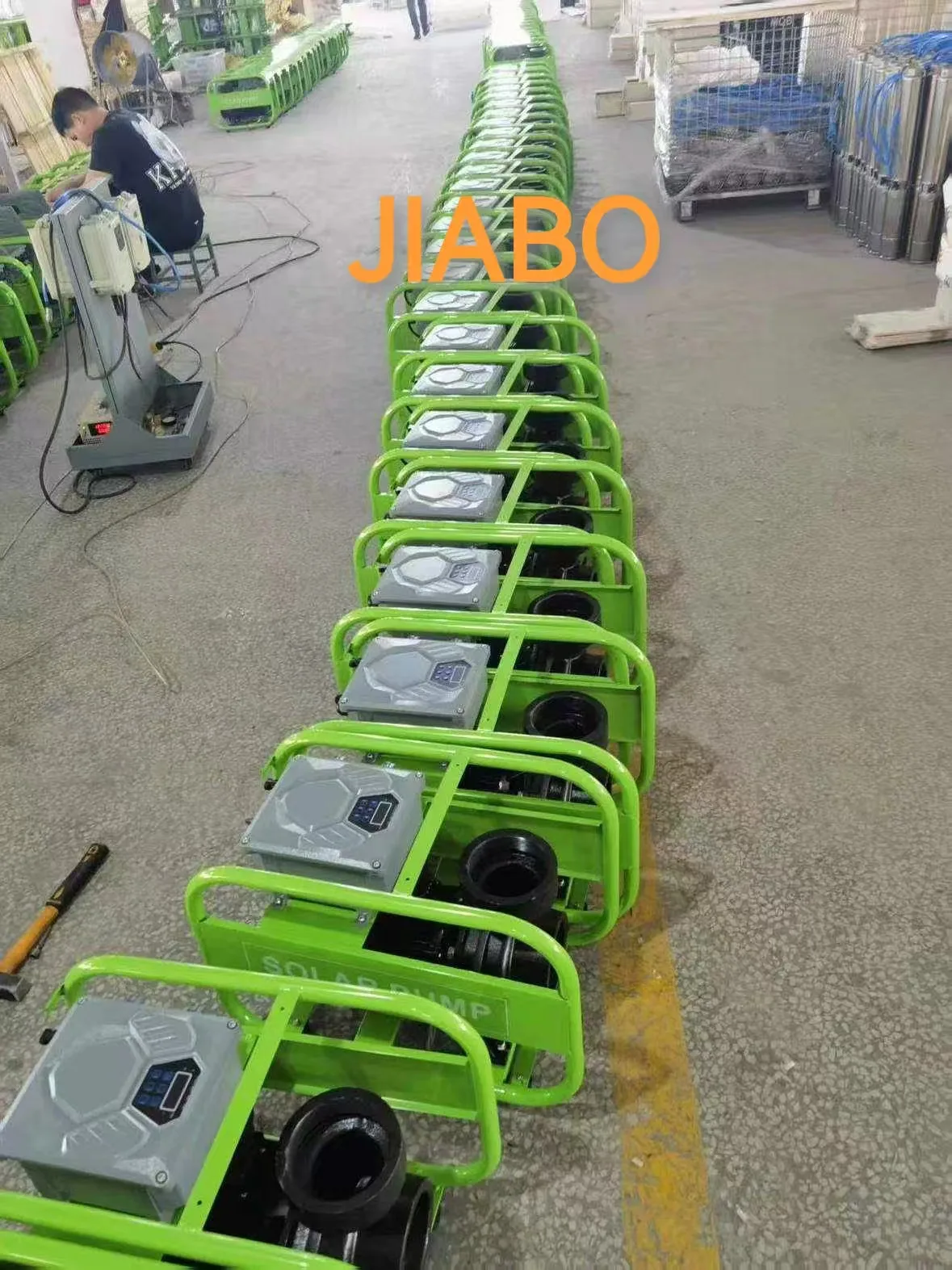
Compare the target duty with the exact model curve, then check controller DC input range and any approved AC backup. Select the PV array and wiring within controller voltage/current limits for local temperature and sunlight; do not infer a universal panel count from motor watts.
5. Check filtration, protections and hose layout
Describe silt, leaves, sand and other solids. Confirm the pump's liquid limits, inlet strainer, dry-run protection, tank or irrigation controls and cable lengths. Oversized or undersized hoses change friction and available flow.
6. Ask for a model-specific quotation
Request the current curve at your duty point, controller and PV requirements, connection dimensions, accessory list, materials and maintenance instructions. Confirm shipping configuration and any destination-country electrical requirements separately.
Worked starting point: pumping from a pond
Suppose irrigation requires 72 m³/day and six useful pumping hours, giving a first-pass 12 m³/h. If static lift and irrigation pressure together require 18 m and pipe/filter losses are estimated at 5 m, ask for a curve near 12 m³/h at 23 m total head. Suction conditions and actual losses still need field measurement; this is not a guaranteed model duty.
Frequently asked questions
Can I use a solar surface pump on a deep borehole?
Usually a borehole submersible configuration is considered when the water is below a surface pump's verified suction capability. Check the actual dynamic water level and pump design.
Does a 3-inch outlet guarantee more irrigation flow?
No. Flow at the required head depends on the pump curve, speed, suction and pipe system. Connection size alone cannot establish it.
Can AC/DC backup run any solar pump?
No. Verify that the exact controller and motor are approved for the proposed AC supply and switching arrangement.
Engineering background
These references explain general pump-selection principles; they do not certify a JIABO product or replace its current datasheet.
- FAO — Solar Powered Water Lifting for Irrigation ↗
- FAO — Water Lifting Devices ↗
- Hydraulic Institute — Pump Curves ↗
Confirm all final selections against the exact model’s latest performance curve, material specification and installation instructions.