
Engineering selection guide
How to Select a Progressive Cavity Pump for Sludge Transfer
Select a sludge transfer pump using solids content, inlet feed and differential pressure. Compare flooded-suction and hopper-fed progressive cavity pumps for wastewater sludge and filter press feed.
A practical selection sequence
1. Identify the sludge and how it varies
Specify the source, percent dry solids by weight, largest solids, fibers or grit, temperature and chemical exposure. Describe how the material behaves after it sits. Sludge samples or process records can help the supplier assess a duty when a single viscosity figure does not describe it well.
2. Choose a feed arrangement
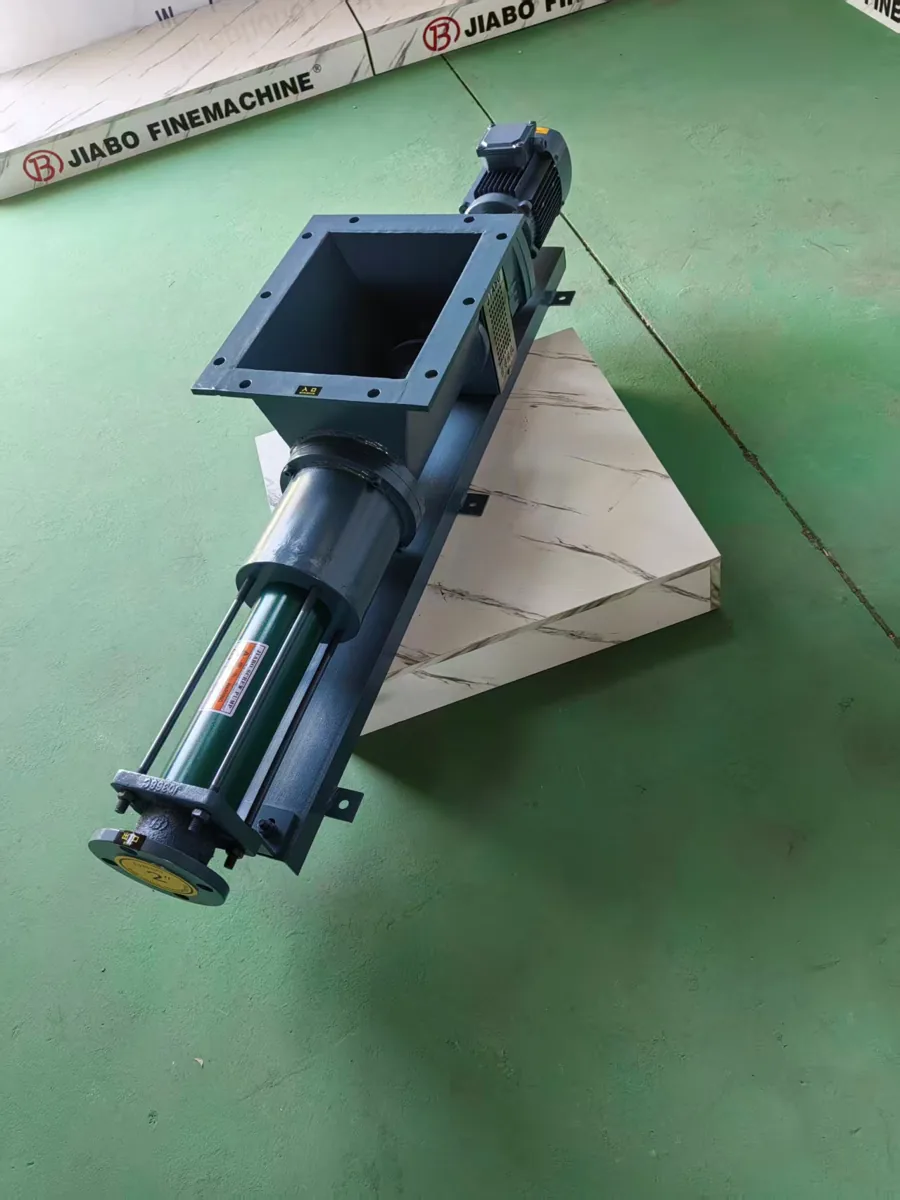
For pumpable sludge, evaluate a piped inlet with sufficient feed at the lowest tank level. For thickened material that bridges or feeds intermittently, ask whether an open hopper and a suitable feed mechanism can keep the pump filled. Share the upstream equipment and discharge geometry so the supplier can check how material reaches the inlet.
3. Size for the full pressure cycle
For tank transfer, account for line friction and destination pressure. For filter press feed, give the initial fill flow, the allowed flow as pressure climbs, and the maximum differential pressure near the end of the cycle. Ask the supplier to confirm speed, stages and torque at each point and specify blocked-discharge protection for the system.
4. Review wear and service access
Grit and abrasives can wear the rotor and stator. Ask about allowable speed, elastomer compatibility, seal arrangements, flush requirements and the clearance required to pull the rotor and stator. Include spare part numbers and service instructions in the quotation review.
Example inquiry for a filter press feed pump
Send the press supplier’s fill-flow target, the pressure at which flow should taper, and the final pressure limit. Add the sludge source, dry solids range, inlet feed arrangement, pipe dimensions and power supply. For example, a press that initially needs 25 US GPM (5.7 m³/h) and reaches 120 PSI differential near the end of the cycle can start with the 1.2 MPa group (about 174 PSI). JB092CNZL12J lists 4.2–15 m³/h on clean water and is a candidate for review. Ask for the minimum controllable flow at final pressure, the sludge-specific curve and torque across the cycle, and the recommended protection settings. Confirm whether the press needs a different configuration if the end-of-cycle flow falls below the proposed pump’s stable operating range.
Frequently asked questions
When should I ask about a hopper-fed sludge pump?
Ask when sludge fails to flow consistently into a conventional piped inlet. The supplier needs to check whether a hopper and its feed arrangement can maintain a continuous supply to the pump.
Can one progressive cavity pump handle any sludge?
The usable solids, fiber and grit limits depend on the exact pump geometry, speed, feed arrangement and materials. Describe the worst expected sludge condition when requesting a selection.
Engineering background
These references explain general pump-selection principles; they do not certify a JIABO product or replace its current datasheet.
- Macon Water Authority — Example sludge pump duty specification ↗
- Hydraulic Institute — How viscosity affects pumping ↗
Confirm all final selections against the exact model’s latest performance curve, material specification and installation instructions.