
Engineering selection guide
Self-Priming vs Centrifugal Pump: Which Do You Need?
A self-priming pump may itself be a centrifugal pump. The useful comparison is a self-priming centrifugal design versus a standard centrifugal pump that needs a flooded or separately primed suction line. Choose from source level, suction layout, liquid and the required flow at head.
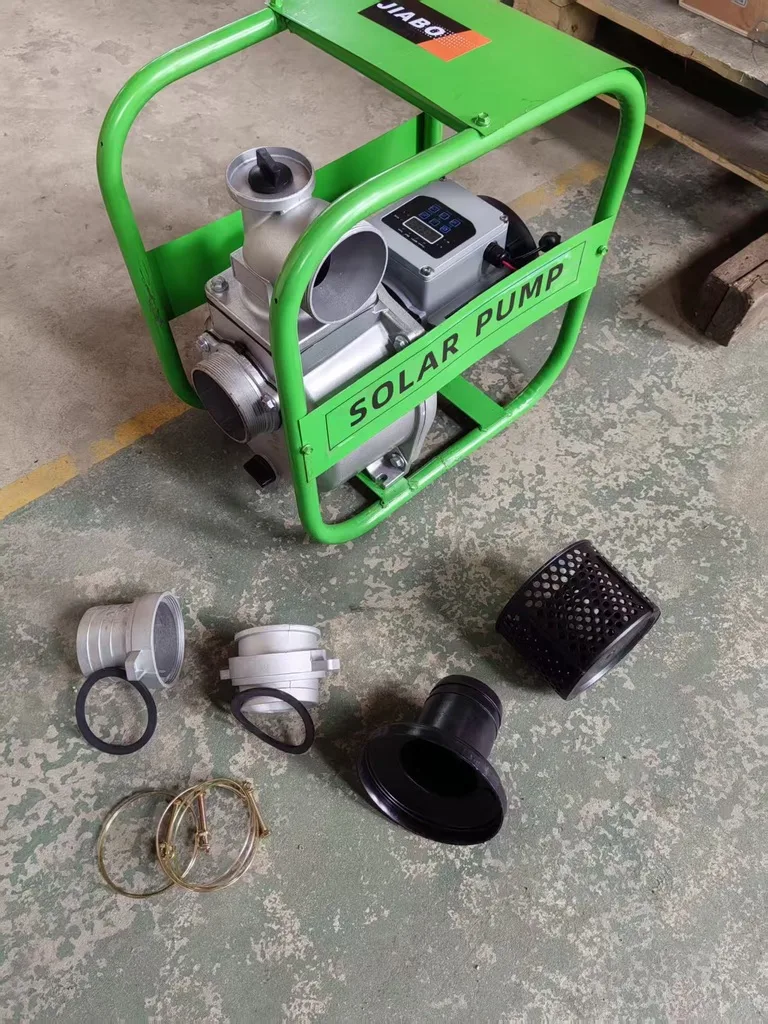
A practical selection sequence
1. Understand what self-priming means
A standard centrifugal pump normally needs liquid in its casing and suction line before it can pump. A self-priming centrifugal design can remove air from the suction line after its casing or priming chamber has been filled as instructed. Self-priming does not mean dry-running, and a pump should never be assumed to restart from a completely empty casing.
2. Compare the water level with the pump position
If the lowest source level stays above the pump inlet, a flooded-suction arrangement may be practical and a standard centrifugal model can be considered. If the pump must stand above a pond, tank or sump, a verified self-priming model or separate priming system may be needed. Measure the vertical lift from the lowest operating water level, not just from the top of the tank.
3. Account for the entire suction line
A long or narrow suction hose, high water temperature, altitude, blocked strainer or small air leak can prevent reliable priming. Specify pipe diameter and length, bends, valves, inlet submergence and water temperature. Ask for the exact pump's permitted suction arrangement, priming procedure and NPSH data; a generic maximum suction-lift claim is not a site guarantee.
4. Match hydraulic duty after the priming check
Calculate the required flow and total dynamic head, including elevation, discharge pressure and friction losses. Check the exact model curve at that paired duty point. Maximum flow and maximum head are separate limits and cannot be treated as one operating point. Also confirm motor power, frequency or solar-controller input for the actual installation.
5. Check the liquid and construction
Clean irrigation water, rainwater, oil and solids-bearing wastewater may require different wetted materials, impellers and seals. A self-priming water pump is not automatically suitable for diesel, chemicals or abrasive solids. Tell the supplier the liquid, temperature, solids and any hazardous-area requirements before selecting a series.
6. Request the exact start-up instructions
Ask for the model datasheet, flow–head and NPSH curves, priming fill volume, permitted suction lift under stated conditions, maximum priming time, dry-run protection, connection drawing and maintenance steps. For a solar pump, confirm whether the controller supports the required starting and low-sunlight behaviour.
Example: drawing irrigation water from a pond
A pump is installed above a pond whose water level falls during the season. The buyer measures the maximum vertical lift from the lowest water level, the suction-pipe route and the required irrigation flow and discharge pressure. Those values establish whether a flooded suction is possible and whether a self-priming arrangement can work. The supplier then checks the model-specific priming limit and flow–head curve. No pump can be recommended from the words ‘self-priming’ or ‘centrifugal’ alone.
Frequently asked questions
Is a self-priming pump a centrifugal pump?
It can be. Self-priming describes how a pump clears air from its suction line; centrifugal describes the pumping principle. Some centrifugal pumps have a self-priming design, while standard centrifugal pumps generally need a flooded or separately primed inlet.
Does self-priming mean the pump can run dry?
No. Follow the exact model's filling and start-up instructions. Many self-priming designs need liquid in the casing before starting and can be damaged by prolonged dry running.
Which is better for a pond or canal?
The source level and installation decide. Flooded suction can simplify operation if feasible; a verified self-priming arrangement may help when the pump is above the water. Check suction losses, NPSH, water quality and the operating curve.
Engineering background
These references explain general pump-selection principles; they do not certify a JIABO product or replace its current datasheet.
Confirm all final selections against the exact model’s latest performance curve, material specification and installation instructions.